- Wild card
- Woven story from the wind
- Kollon Mena
- Iromedia
- Let The Bad Speak
- Raised from the dirt
- As a glass piece, as a woman
- The sky is bleeding
- The blue memory
- Peri-phéro
- Flowing on dreams
- Stay, here, in the heart of my glassy wall
- Online exhibition and talks
- I heard you and I am
- Jing wang jia yuan neighbourhood
- Like every day
- Horizontals Verticals
- Reflection
- My Persian Carpet
- Identity
- Selected Works 2014
Wild Card
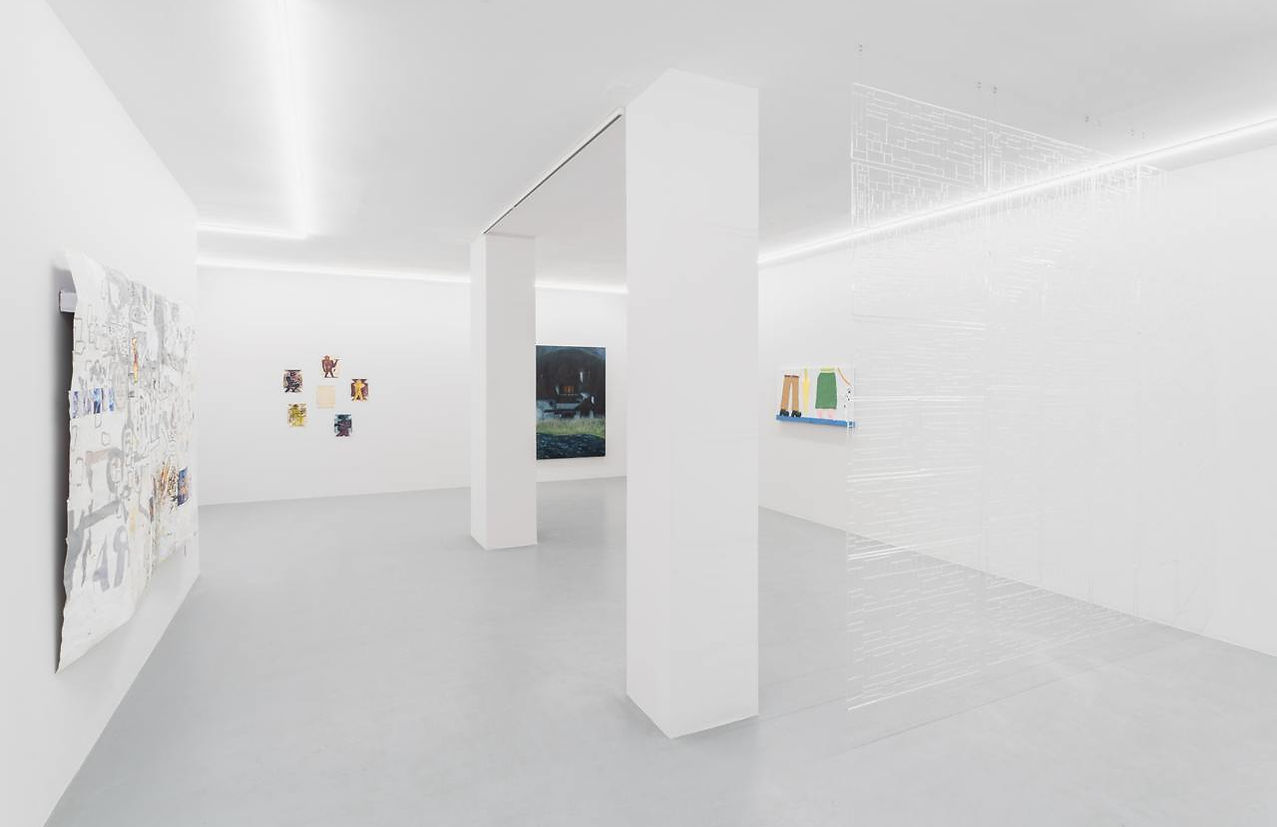
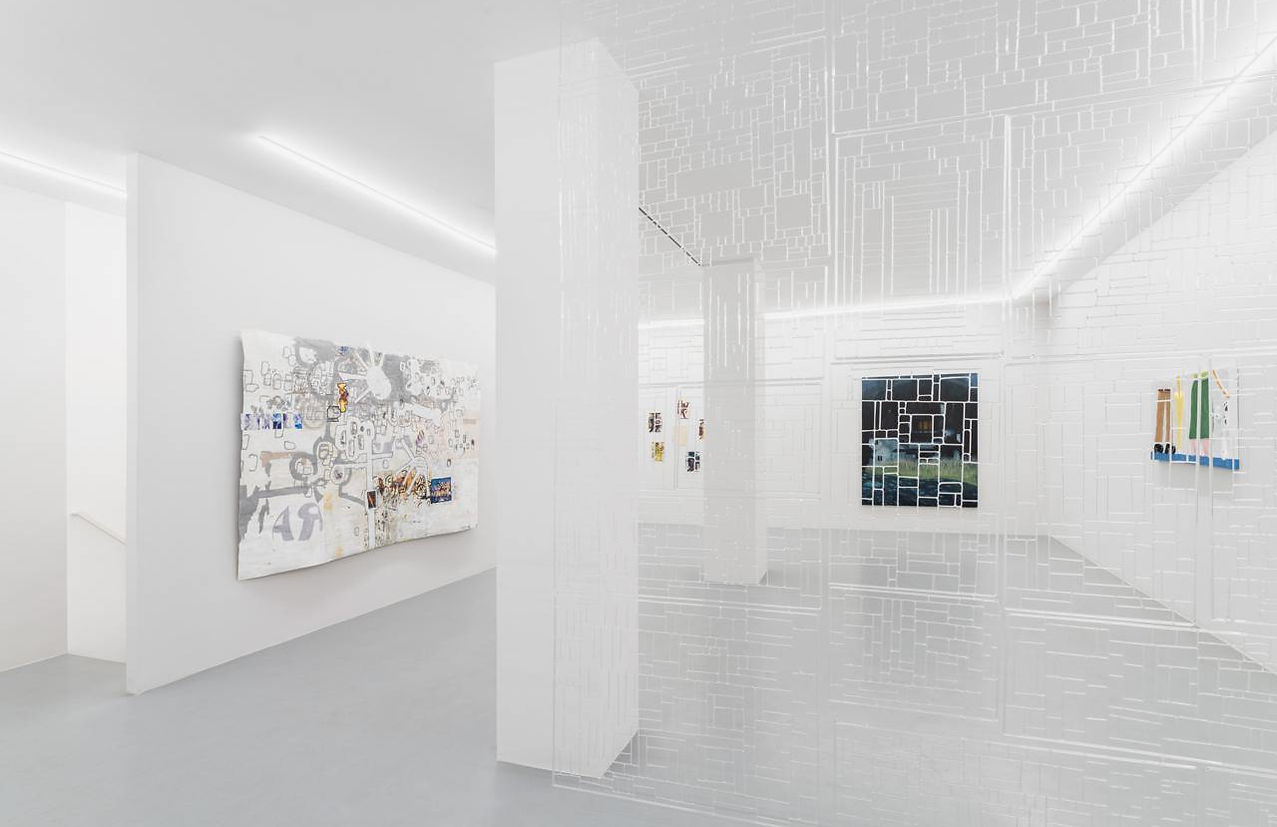
Curated:Sara&André
Artists:Chikki Chikki, Eduardo Antonio, Elmira Abolhassani, Hugo Castilho, Madalena Anjos
Osias André, Veloz Narua
A wild card (also wildcard or wild-card […]) is an invitation to a tournament or a playoff berth awarded to a team or individual that does not qualify via an automatic bid. In some events, wildcards are chosen freely by the organizers. Other events have fixed rules.»
I
«While as an artist you may think you are free to do as you please, in order for your work to be economically sustainable, critically acknowledged, or even simply brought into contact with the art public, it needs to conform to certain network protocols that dictate the forms of art production that circulate.» In recent years, many of these protocols—once merely implicit in the so-called art world—have been laid bare, either through disciplines such as history and sociology of art, but also by the field of institutional critique, with approaches ranging from satirical to more strict.
II
Here are some examples: «It is essential that one associates exclusively with those who are at a higher professional level than oneself. Only in this way can an art professional aspire to ascend the social ladder and rise in the field. In contrast, those who surround themselves with less successful people will be associated with their position in the art world. The successful artist, additionally, should look for counterparts in other fields, visiting exhibitions, for example, with singers, movie stars, designers and models, all of those being public positions that carry much greater cache than the art world itself.»
«In Los Angeles [our remark: we would like you to read Lisbon instead], artists must always look like they are rested and fresh. In New York [another remark: we would like you to read Berlin], the more haggard and hardworking you look the better. It’s always appropriate to be on your way to or to have just returned from international travel.» «An artist is expected to have local roots but think globally—staying in one’s home country isn’t enough. They’re expected to go abroad, build networks, and work with international galleries, museums, and collectors.»
III
Moving on to other aspects: «artists must attempt, at all times, to have an interesting appearance, one that implies great introspective and psychological intensity. Being physically attractive is most desirable, but in case of not having such attributes, an artist must develop “character”.»
«Artists are not only permitted but are in fact required to be underdressed at formal institutional functions.» Yet, they’re still expected to «(…) dress keeping up with
fashion, adding an unexpected element (for example, colored socks). Such an element will send the message that, while the artist is able to conform to the rules of the game, he or she is still able to provide an artistic, individual vision.»
However «the relationship between an artist’s work and attire should not take the form of a direct visual analogy. A stripe painter may not wear stripes.
The relationship between an artist’s work and attire should function in the manner of a dialectic, in which the discrepancy between the personal appearance of the artist and the appearance of her work is resolved into a higher conceptual unity. An artist’s attire should open her work to a wider range of interpretive possibilities.»
IV
So far, we’ve focused on what’s expected of artists—but it’s easy to imagine these kinds of expectations applying to other parts of the art world too. For instance: in «galleries, as in churches, one does not speak in a normal voice; one does not laugh, eat, drink, lie down, or sleep; one does not get ill, go mad, sing, dance, make love. Indeed, (…) the white cube promotes the myth that we are essentially as spiritual beings (…) and above the vicissitudes of chance and change.»
Which brings us to the well-known rule we set out to break with this exhibition: «one code of unwritten “etiquette” delivered to me in hushed tones by almost every art-world type immediately upon my arrival in New York was, “Don’t EVER walk into a gallery with your slides (this was before JPEGs); you’ll never get a show that way.”»
V
«You know all too well about the hierarchy in the art world. It’s absolute and, at the same time, it’s subtle and secret, as if it were embarrassing.» «The importance of institutions lies in how they function as systems of rules that dictate and normalize not only our behavior but, perhaps more crucially, our perception of the world around us and how we see ourselves as members of a specific community. Schools define what constitutes knowledge and what doesn’t; courts define what’s criminal and what’s not; hospitals define what’s health and what’s illness. Artistic institutions define what is art and what isn’t, as well as the acceptable ways of engaging with art and how we should behave in front of a work of art.» We could thus say that an institution’s ‘real mission’ is to «consolidate the sense of belonging of some, and the sense of exclusion of the others.»
VI
However «the art world is considered by many as the most sophisticated game ever invented.» And, if we drift a bit, «the doorman’s profession is the most fascinating because it’s the most useless: only open doors need a doorman. After all, things are what they seem, and everyone knows that a door that closes is just a door that opens»
Therefore, and because we believe that artistic practice «works not to interpret this field but to change it; not to change the nature of its products but to change the structure of
positions within it and the relations among the positions it structures. And if such change cannot, or can only barely, be achieved, artistic practice is the attempt to determine the conditions of its possibility.»
So we approached the gallery as a space «(…) “constructed along laws as rigorous as those for building a medieval church», «(…) where conventions are preserved through the repetition of a closed system of values.» And being «the basic principle behind these laws (…) that “the outside world must not come in (…)”» we decided to ‘open’ the gallery door by asking the staff to forward us the emails they regularly receive—on a daily basis—with portfolios and exhibition or collaboration proposals. Then we’ve taken that content as the raw material for the exhibition presented here.
VII
Following the approach taken in past projects, our research reflects on the idea that «(…) the artistic field is no different from any other market in luxury goods. They all serve social competition for status and prestige. But status is not only a matter of status symbols, and prestige is not just a luxury. The pursuit of prestige is only the dominant form of struggles for legitimacy of which culture is a primary site.»
VIII
What «gets most attention when art is discussed in the media is the glamour, the success, the prizes and the excesses of the art market. Hence, a wide audience holds clichéd views of artists as lazy, rich and arrogant.» And yet «(…) the majority of artists are in fact part of an artistic proletariat. They are often people who barely earn enough to live.»
Nevertheless «much like schools, artistic institutions are also places of formation. They shape how we see ourselves and how we consider our social relations.» Within them «(…) our values are subtly negotiated. In truth, these are political spaces—battlefields, if you will—where the ideological currents of broader society meet and clash, with real consequences.» As such «we have only the institutions we are collectively able to imagine and bring to life.»
IX
Once again, I see myself as «(…) a product of a civilization and a culture to which I contribute by acting upon the reality I encounter.» And in positioning myself as an intellectual—«(…) one who ‘has the ongoing responsibility to stand among their people and be the narrator of their story» —I put together an exhibition that seeks to be «(…) an insurgency against the chalk-drawn lines that dictate the absurdity
of this prison, which exists only to serve the entrenched and protect their caste-bound privileges.» With that, one final precept: «(…) you cannot be innocent in the art world. You must address its self-awareness and its rules, its history and the context in which you work.»
«(…) sanctity lies in the ability to carry out purposeful transgressions» and yes, «the art world offers a nice life. Come in! It’s not easy though—it’s not all wealth, celebrity, and free booze.»
And to wrap it up: «there ought to be alcohol for at least the first two hours of a three-hour opening. The last hour is usually the best, but not if there’s no alcohol.»
Sara & André